Tag: profile

  • Dan Gunn Co-edits Third Volume of “The Letters of Samuel Beckett”

    Dan Gunn Co-edits Third Volume of “The Letters of Samuel Beckett”

    I researched and wrote this article during my time as Communications Coordinator for the American University of Paris. It was published as a news piece at aup.edu on October 8, 2014.

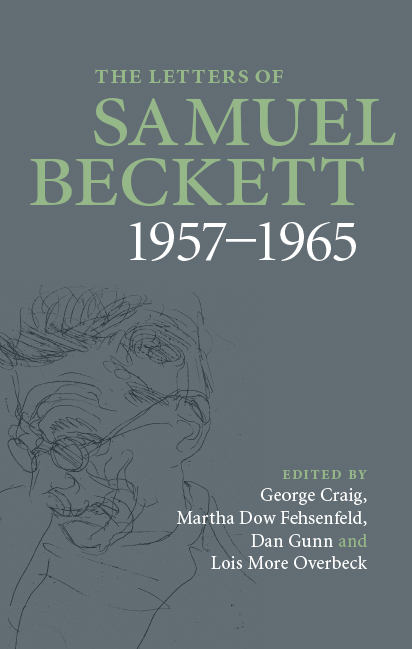
    Professor Dan Gunn has been working on the editing of the third volume of Beckett’s letters, which is being published this month. The letters showcase Beckett’s grappling with fame as well as his relationships, most notably with Barbara Bray, an English critic and translator.

    During this period, as Gunn describes it in his Introduction to the Volume, Beckett struggled to reconcile his “aesthetic of failure” with his newfound success as a writer; he was achieving worldwide recognition and was well on the way to winning the Nobel Prize. Gunn suggest that the challenge was not so much that of displaying his disregard for success as much as that of “giving space to something other than what has been recognized up to now as achievement in literature.”

    Gunn also highlights the importance of Beckett’s blossoming relationship with Barbara Bray, whom he had met while working on his first radio play, All That Fall. Over the course of thirty years, Bray and Beckett exchanged more than seven hundred letters, early examples of which are featured in this volume. Their relationship marks a turning point in Beckett’s life and letters, as he starts to open up about his work in progress. Gunn explains: “Where before he has been very reticent about whatever work he was engaged in writing, now he feels […] free to discuss almost every step in the writing, then the editing, then the production of this work, right down to his many hesitations over its title.”

    One of the many challenges faced by Gunn and his co-editors has been in establishing contexts for the letters, particularly that of the Algerian War. Many of Beckett’s friends were involved in the resistance to the war, such as his publisher at Les Editions de Minuit Jérôme Lindon, as well as Sorbonne friend Jean-Jacques Mayoux.  When the latter’s apartment was bombed as a result of his political activism, Beckett was outraged. However Beckett’s letters reveal little of these events. Luckily, Gunn was able to collect one of the missing pieces when he met Mayoux’s daughter by chance at a dinner-party. She provided a first-hand account of the bombing, and this has become “one of the footnotes by which [the co-editors] try to give a sense of what life was like in Paris, for Beckett, during these turbulent times.”

    Gunn has been a Professor of Comparative Literature at AUP since 1989 and is the Director of the Center for Writers and Translators. He teaches, amongst others, the class Proust and Beckett: The Art of Failure. Professor Gunn has also co-edited Volumes I and II of Beckett’s letters, to widespread critical acclaim. Volume IV is due for 2016.  The letters are also being published in French by Gallimard.
  • Combining Art And Finance

    Combining Art And Finance

    I interviewed art fund co-founder and former banker Serge Tiroche and wrote his profile as part of series showcasing successful alumni from the American University of Paris. It was also adapted for a fundraising brochure. The original article can be found on AUP’s website.

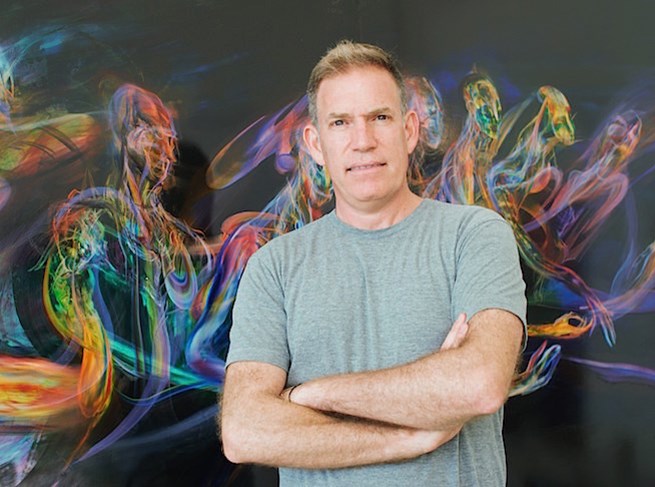
    Serge Tiroche ’92 was born in Israel in 1966 into a family of art dealers: his father was a gallery owner in NY, Tel-Aviv and Paris. He grew up in Jaffa and, after his military service, moved to Paris to complete a BA in International Business Administration with a minor in Modern Arts at AUP. Tiroche’s studies marked the beginning of his adventure blending his knowledge of finance with his passion for art. Tiroche made his debut in the art world in 1986 when he interned at Parisian auction house Loudmer.

    After graduating in 1992, Tiroche co-founded the Tiroche Auction House in Israel and became more involved with his family’s international art trading activity. Tiroche subsequently worked in banking for a decade before pursuing his passion and founding Art Vantage with his partner, Russ DeLeon. Art Vantage holds the artworks of the Tiroche DeLeon Collection, a collection made up entirely of works by artists from developing countries from Serbia to Singapore.

    Tiroche notes, “My relationship with art started when I was very young but I mostly considered it a hobby until quite recently. I became obsessed with collecting contemporary art so I decided to make it my full-time job, combining my investment know-how and my passion for art.”

    The Fire of 1841, Liu xiaodong
    The Fire of 1841 by Chinese artist Liu Xiaodong

    Through the collection, Tiroche wishes to level the playing field for non-Western artists on the art market as well as provide an attractive investment prospect. The collection also lends its works to independent curators, museum directors and galleries as a part of its global lending program.

    I became obsessed with collecting contemporary art so I decided to make it my full-time job, combining my investment know-how and my passion for art.

    Tiroche explains, “There has been a seismic shift in the art market: ten years ago, less than 2-3% of the art sold went to collectors in emerging markets. Today that number is more 20% to 25% depending on the auction, and it’s growing! Part of the growth we’re seeing in markets and volumes is thanks to the entrance of collectors from new markets.”

    In order to further champion young artists, Tiroche just launched a residency program in his home town of Jaffa. Singaporean artist Ruben Pang completed the first residency this July.

    Tiroche believes the connection established with artists in person is invaluable to the process of collecting art, “I think sadly there aren’t many collectors that go to the lengths that I do. Most rely on their point of contact, usually the gallerist who represents the artist. They rarely visit the artist in his studio.” Tiroche himself travels extensively to meet artists and view their work around the globe.

    In terms of trends in emerging markets, Tiroche’s money is on Africa: “I’m a big believer in African contemporary art. I think African art has always been a huge influence on Western art and has traditionally been underappreciated. If you look back at the last ten years, China was the first market that Western collectors explored, then India, Latin America and now Southeast Asia. Africa is a logical next step.”

    Earth Developing More Roots, El Anatsui
    Earth Developing More Roots by Ghanaian artist El Anatsui

    He continues, “In 2013, Angola was awarded the Venice Biennale’s Golden Lion for the best pavilion, a first for an African country, and just this May one of the artists who received the Golden Lion Award was Ghanaian El Anatsui. There’s also a new art fair focused on African contemporary art that started in London three years ago called 154 which is having its first edition in New York this year. All in all there’s more and more evidence that people are looking to Africa and I believe that’s a sustainable trend. Personally, we’ve been growing our African collection consistently over the last two years.”

    Tiroche remembers AUP fondly, “My time in Paris was truly critical in shaping my future, both personally and professionally. The ability to construct my own minor at AUP gave me a broad theoretical basis in Art History, History of Photography, Architecture, French Cinema and even a hands on course in Photography. I also made lots of friends, some of whom I am still in contact with. Plus the croissants and Haussmaniann avenues … I loved every minute.”

    *All photos courtesy of Serge Tiroche.